

The Chicken Road Demo is the easiest way to understand how the game flows before you put real money on the line. It lets you see the risk pattern, the timing of each jump, and how quickly a round can turn. On this page, we explain what the demo is, what it can teach, and why people search for smart tools alongside it. If you are comparing a Chicken Road Game Demo with talk of bots and predictors, this guide keeps the terms in context.
You will also see where the common tool names fit, such as Chicken Road Predictor, signal bots, and AI bots. Those phrases are often used loosely, so the goal here is to separate gameplay practice from marketing claims. We will focus on what a demo can realistically show and what it cannot promise. That makes the Chickenroad Demo far more useful than hype when you are learning the game.

How Chicken Road Game Demo Works for New Players
A demo round uses virtual credits, so you can test timing without risking a bankroll. In the Chicken Road Game Demo, the pattern of the round still matters, but the stakes are informational rather than financial. That makes it easier to watch how far you are willing to push each run. Many new players start with a Chicken Road Demo because it removes pressure from the first few attempts.
The useful part of demo play is not just entertainment; it is pattern recognition. You can learn how often you prefer to cash out, how fast you react, and where impatience starts to cost points. A Chickenroad Demo also makes it simpler to compare your own decisions from one round to the next. If you record what happens, the learning curve becomes much clearer.
How does the demo help you understand cash-out timing?
The main lesson is that each round rewards timing more than speed. In the Chicken Road Game Demo, you can test when a cautious exit feels safer than chasing a bigger multiplier. That is valuable because people often overestimate their reaction time in the live version. The demo shows how fast a small delay can change the outcome.
If you play several short sessions, you will notice a pattern in your own decisions. A Chickenroad Demo makes those habits visible without the distraction of real losses. Players who learn to stop on purpose usually do better than players who keep pushing by instinct. That simple discipline is often more important than any tool.
What should a new player focus on first?
Start with round rhythm rather than profit targets. The Chicken Road Demo helps you notice how quickly momentum builds and why waiting too long becomes risky. Instead of asking how much you can win, ask when you feel tempted to stretch a round. That question usually reveals more about your style than a scoreboard does.
A second useful focus is consistency. The Chickenroad Game Demo lets you repeat the same approach across multiple rounds and compare the result. When your notes show that a certain habit keeps appearing, you can adjust it before you play with higher stakes. That is where demo mode becomes a learning tool, not just a preview.
A simple routine can make the Chicken Road Demo more educational than random clicking.
- Open the demo and play a few rounds without changing settings.
- Watch how the risk builds before each cash-out point.
- Try early exits in several rounds and compare the results.
- Then test slightly longer runs and note where pressure rises.
- Repeat the same pace until your choices feel deliberate.
This kind of practice gives the Chickenroad Demo a clear purpose and helps you spot habits faster.
Chicken Road Demo Features for Safe Trial Gameplay and Practice

The safest thing about the Chicken Road Demo is that it separates learning from money management. You can try different exit points, speed up the round, and observe how the interface responds without worrying about a balance drop. This is why many review pages talk about demo play as a practice space rather than a shortcut. It gives you a clean view of the game before you decide whether to continue.
A demo session also makes it easier to compare habits across devices. On mobile, on desktop, or in a quick browser session, the Chicken Road Game Demo usually teaches the same core lesson: timing matters more than guesswork. That consistency helps when you are trying to build a routine. It also explains why people search for Chickenroad Game Demo features before asking about tool names.
Which demo features matter most during practice?
The most useful feature is the low-pressure environment itself. With the Chicken Road Demo, you can repeat decisions quickly and see whether your timing improves from session to session. A stable interface is also important because it lets you compare your choices instead of adjusting to technical noise. That makes the demo good for practice, even if it is not a prediction engine.
Another useful feature is flexibility. The Chickenroad Game Demo lets you pause mentally between rounds and think about what you want to test next. Some players use it to practice very short sessions, while others use it to study longer stretches of risk. Either way, the value comes from observation, not from chasing a fast win.
How do you know if demo practice is working?
You know practice is working when your decisions become clearer. The Chicken Road Demo should help you identify whether you prefer quick exits, moderate risk, or longer pushes. If every session feels random, you may be clicking without a plan. A good demo habit gives you a repeatable method that you can describe afterwards.
You should also see fewer emotional swings. The Chickenroad Demo is useful when it shows where impatience starts to affect your play. If you can finish a session and explain why you stopped at certain points, that is a sign the practice is doing its job. The goal is awareness first, not bigger numbers.
Before moving beyond the Chicken Road Game Demo, check whether these practice habits feel natural.
- You can explain the multiplier rhythm in your own words.
- You know where you usually cash out during a round.
- You can play several rounds without rushing your decisions.
- You have a clear limit for session time and losses.
- You are not relying on a tool claim to make every choice.
If those points feel familiar, the Chickenroad Demo is teaching you something useful rather than just filling time.
- Virtual balance
- Uses test credits instead of cash
- Stakes
- No real-money pressure
- Round rhythm
- Same game pace as the live version
- Cash-out choice
- Manual decision in each round
Chicken Road Predictor and Predictor App Options Explained

Searches for the Chicken Road Predictor and Chicken Road Predictor App often come from players who want a shortcut around uncertainty. The reality is that most so-called prediction tools are only making claims about patterns that cannot be guaranteed. A demo can show how the game behaves, but it does not turn into a forecasting system. That difference matters if you are trying to separate useful information from marketing language.
People also use the terms Chickenroad Predictor and Chickenroad Demo in the same conversation, which can make the topic feel more advanced than it is. In practice, a predictor usually promises more certainty than a game can honestly provide. The safer approach is to treat any app claim as something to question, not something to trust automatically. That keeps expectations grounded and helps you avoid chasing certainty where none exists.
Can a predictor really forecast the next round?
A genuine forecast would need access to information the game does not expose, so claims like that should be treated carefully. The Chicken Road Predictor is often discussed as if it can read future outcomes, but that is not how probability-based gameplay usually works. What you can do is study your own decisions and notice patterns in your reactions. That is very different from knowing the next result.
If a Chicken Road Predictor App says it can guarantee a future round, that is a warning sign. Real gameplay information is limited, and no honest tool should promise certainty where randomness is involved. The useful mindset is to ask what data the app actually uses and whether it can prove anything meaningful. Without that proof, the claim is just a claim.
What should you check before trusting an app claim?
First, look at what the app says it actually measures. The Chickenroad Predictor label may sound technical, but the important question is whether it explains its method clearly. Vague language about secret models or instant signals usually means you should slow down. Clear descriptions are better than dramatic promises.
Second, check whether the tool talks about probability rather than certainty. The Chicken Road Predictor App should never sound like a guarantee machine if it is being honest. Good information explains limits, not just advantages. If a claim hides the limits, it is not doing the reader any favors.
Chickenroad Signal Bot and Chickenroad Predictor Compared for Demo Play
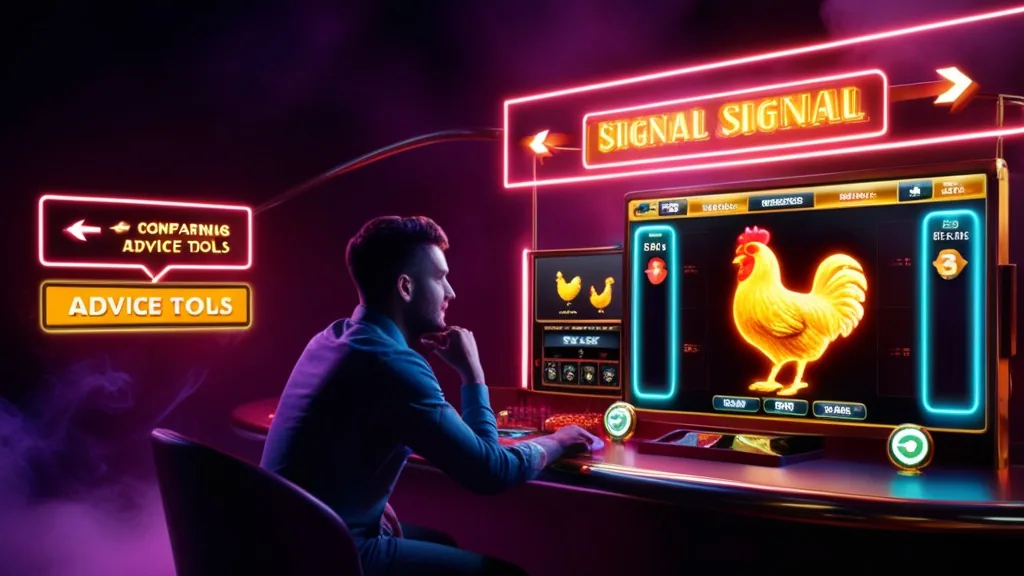
A Chickenroad Signal Bot usually appears in discussions as a tool that sends prompts or suggested actions rather than claiming full prediction. That makes it different from the cleaner-sounding idea of a Chickenroad Predictor, which suggests certainty that the game rarely allows. In demo play, this difference is easier to see because you can test the language of the tool without risking money. The key question is whether the bot is informing you or simply dressing up guesses.
People often compare a Chicken Road Demo with bot-based play because the demo removes financial pressure while you evaluate claims. That is useful, since many tools sound convincing until you see how little they actually explain. The comparison also helps you separate decision support from automation hype. Once you understand the distinction, the terms stop sounding interchangeable.
How is a signal bot different from a predictor?
A signal bot usually sends a recommendation, such as when to stop or continue, while a predictor claims to know what comes next. The Chickenroad Signal Bot label is often used for tools that frame their advice as guidance rather than certainty. That distinction matters because guidance can be subjective, while prediction implies a stronger promise. In practice, both deserve scrutiny.
If you see the word Chickenroad Predictor, ask what makes it more than an opinion engine. Many tools use confident wording to sound smarter than they are. The more specific the explanation, the easier it is to judge whether the tool has real value. If the explanation is thin, the label is doing more work than the product.
Why is demo play useful when comparing tools?
Demo play creates a neutral place to compare claims. With the Chicken Road Demo, you can watch how a signal bot behaves across several rounds and decide whether the advice seems consistent or random. That is better than relying on a polished sales message. You get to judge the tool against the game itself.
The same test works for any Chickenroad Demo discussion because the environment removes the cost of experimentation. If a tool only looks useful when there is no pressure to prove it, that tells you something important. Demo mode does not prove a tool works, but it does reveal whether the tool sounds believable. That is a valuable filter.
Chicken Road Bot AI, Signal Bot, and Automation Concepts

When people say Chicken Road Bot Ai, they are usually talking about a system that claims to automate decisions or analyze the game faster than a human can. That sounds impressive, but the important detail is what the bot can actually observe and what it is just guessing. A Chicken Road Bot can be simple automation, a rule-based script, or just a marketing label. The name alone does not tell you how advanced it really is.
The same caution applies to Chickenroad Bot Ai, especially when it is bundled with promises about effortless wins. In real use, automation ideas often run into platform rules, account risks, and the simple fact that no tool can remove uncertainty from the game. That is why it helps to separate technical terms from hype. Once you do, the conversation becomes much more practical.
What does AI mean in a game bot context?
In practice, AI can mean anything from simple pattern matching to more complex decision support. The Chicken Road Bot Ai phrase sounds modern, but it does not guarantee real intelligence or accurate outcomes. A lot depends on the data it can see and the rules it follows. Without that detail, the term is mostly a label.
A Chicken Road Bot may also be advertised as if it learns constantly, but learning claims should be treated carefully. If the bot cannot explain its inputs, its outputs, or its limits, then the AI language is probably doing the marketing work. The more transparent the method, the easier it is to judge its usefulness. That is a good rule for any tool discussion.
Why should automation claims be handled cautiously?
Automation often sounds attractive because it removes effort, but games are not spreadsheets. The Chickenroad Bot Ai idea can hide the fact that the game still involves uncertainty and timing choices. Even if a script makes decisions quickly, it does not magically improve the underlying odds. That is why speed and intelligence are not the same thing.
A second reason for caution is account safety and rule compliance. The Chickenroad Signal Bot and other automation terms can blur the line between advice and active control. If a platform restricts automated behavior, using such tools can create more problems than they solve. The safer mindset is to learn the game first and treat automation claims as claims, not shortcuts.